
Social engagement · Case
A day in pictures
An app for a resident with autism. She needs a fixed daily routine, cannot tell the time and should have to read as little text as possible.
A support worker described the problem to me. By the end of the same day, the first prototype and an explainer film for her team were ready.
The starting point
- 01The day has to run the same way every day. She has to see what comes next, not read it.
- 02A clock does not help. She needs a sign for when something is coming to an end.
- 03The team plans between two appointments, on their phones, and often changes the plan at short notice.
What was built
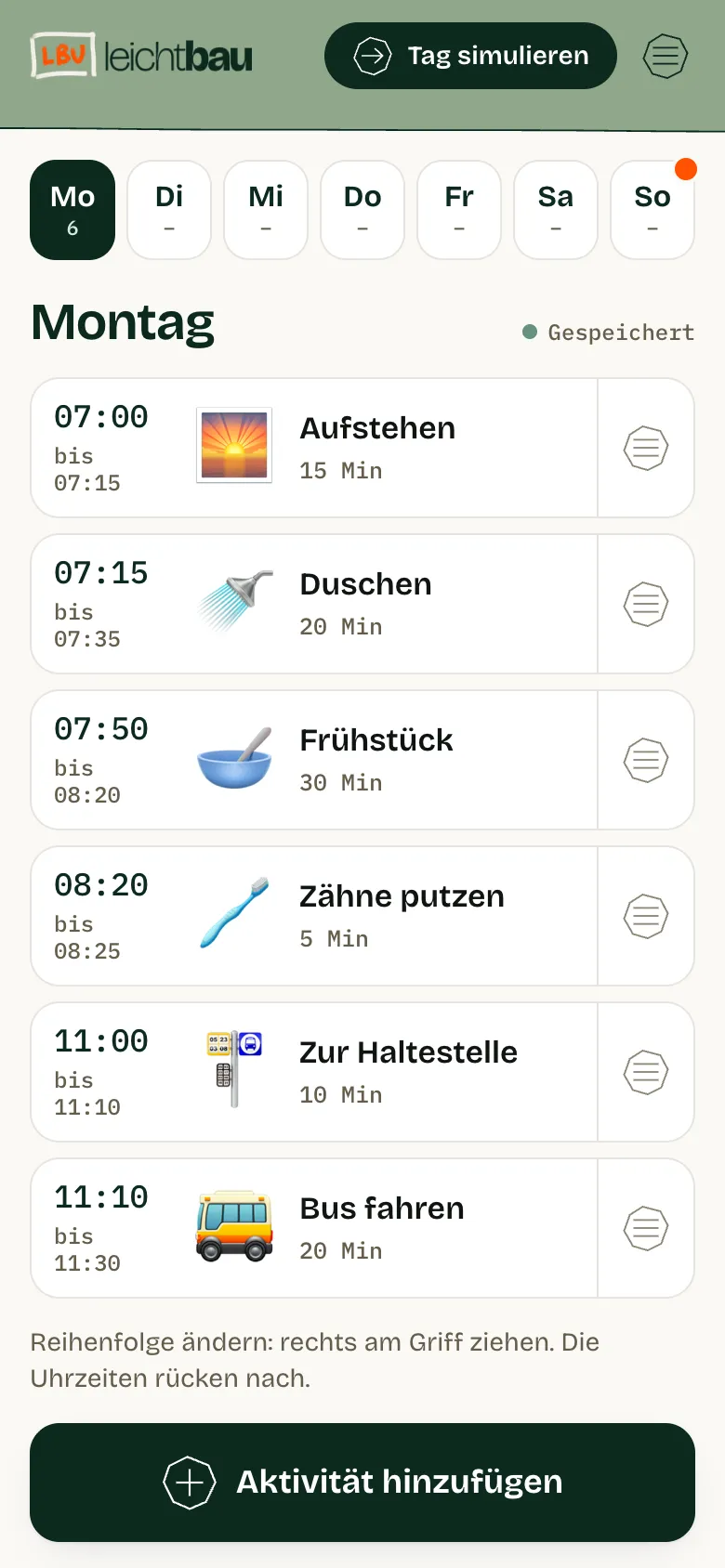 Planning on the phoneChoose a day, tap an activity, set from when to when. 64 activities as pictures in seven areas, and the team can add its own.
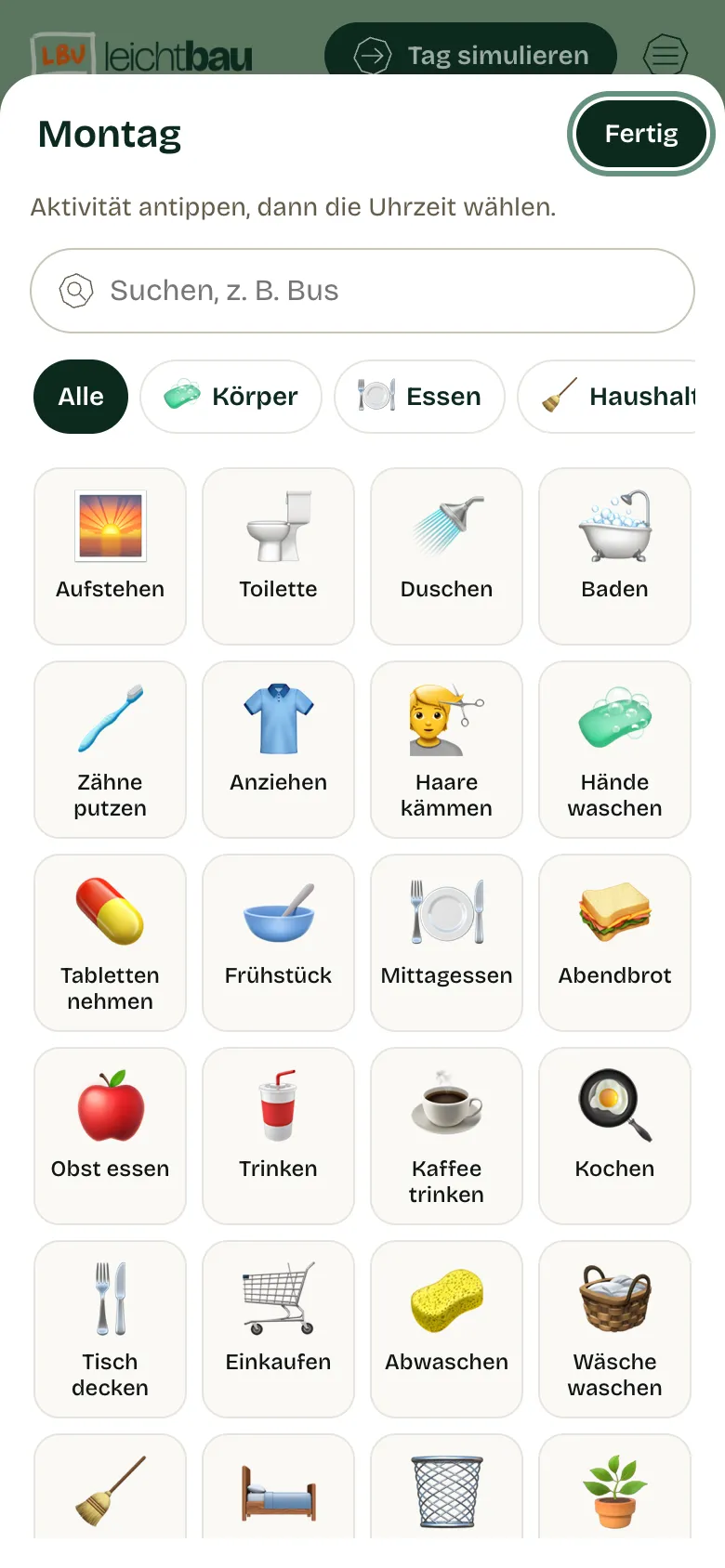 Pictures instead of wordsGetting up, showering, brushing teeth, taking the bus: every activity is a picture she knows.
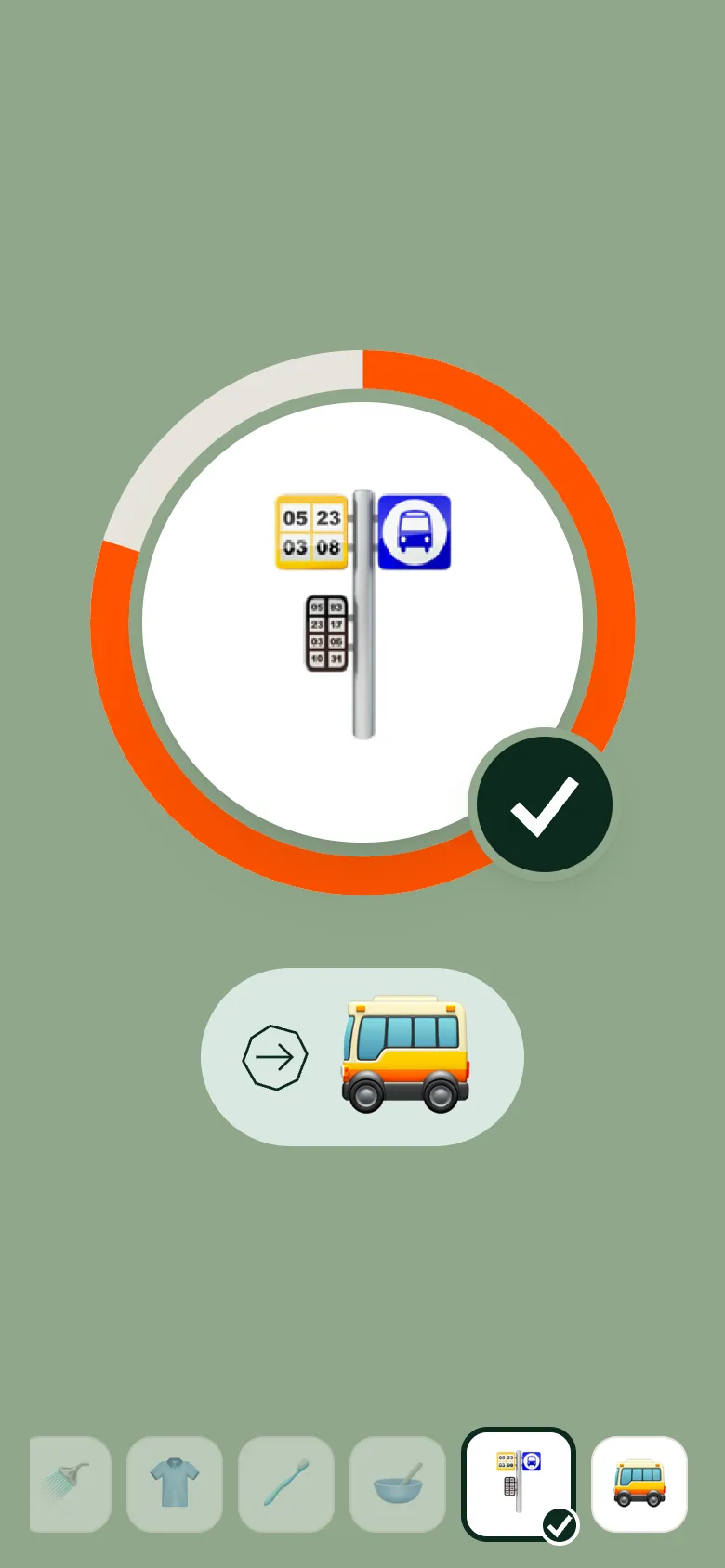 Green means nowOne large picture in a ring, and the ring shows the time remaining. A tick to confirm, next to it the next picture.
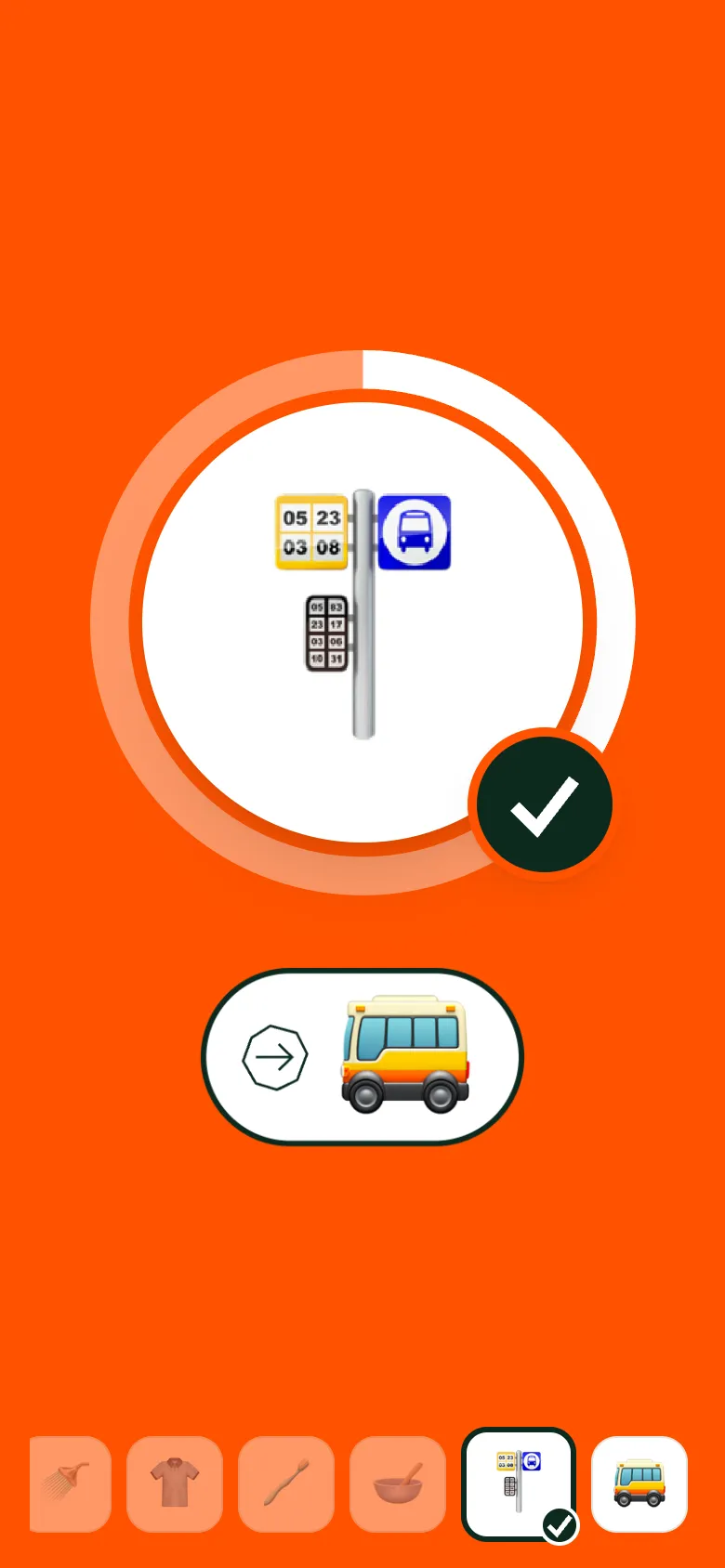 Orange means soonFive minutes before the change, the screen turns orange, and a voice says: “In a moment, it is time for taking the bus.”
- A warm voice263 sentences, recorded in advance: “Now”, “Soon”, “After that” for every activity, and “Great, well done!”.
- Simulate the dayThe team plays through the day beforehand in fast-forward, with colour, sound and voice.
- Always in syncWhen the team changes the plan, the resident sees it on her phone straight away.
- 1
- day from problem to prototype with explainer film
- 64
- activities as pictures
- 263
- sentences, recorded in advance
- 0
- words she has to read
Built with FUNKE, explained with ANKER
- FUNKE The app: planning, day view, reminders, simulation, connected between the team and the resident.
- ANKER The voice, the visual language in green and orange, and the explainer film, so that the team can start without training.


Where it stands
A prototype. Next, the team tests it with the resident: does she recognise the pictures, is the sound too much? If it works, it will become an app that also reminds her when the screen is locked, and a version for several residents, each with their own plan.
The plan contains no names and no diagnoses.
Does your organisation have a similar problem?
The same tools I use to build for companies help where fixed routines support people. Tell me where things are stuck.